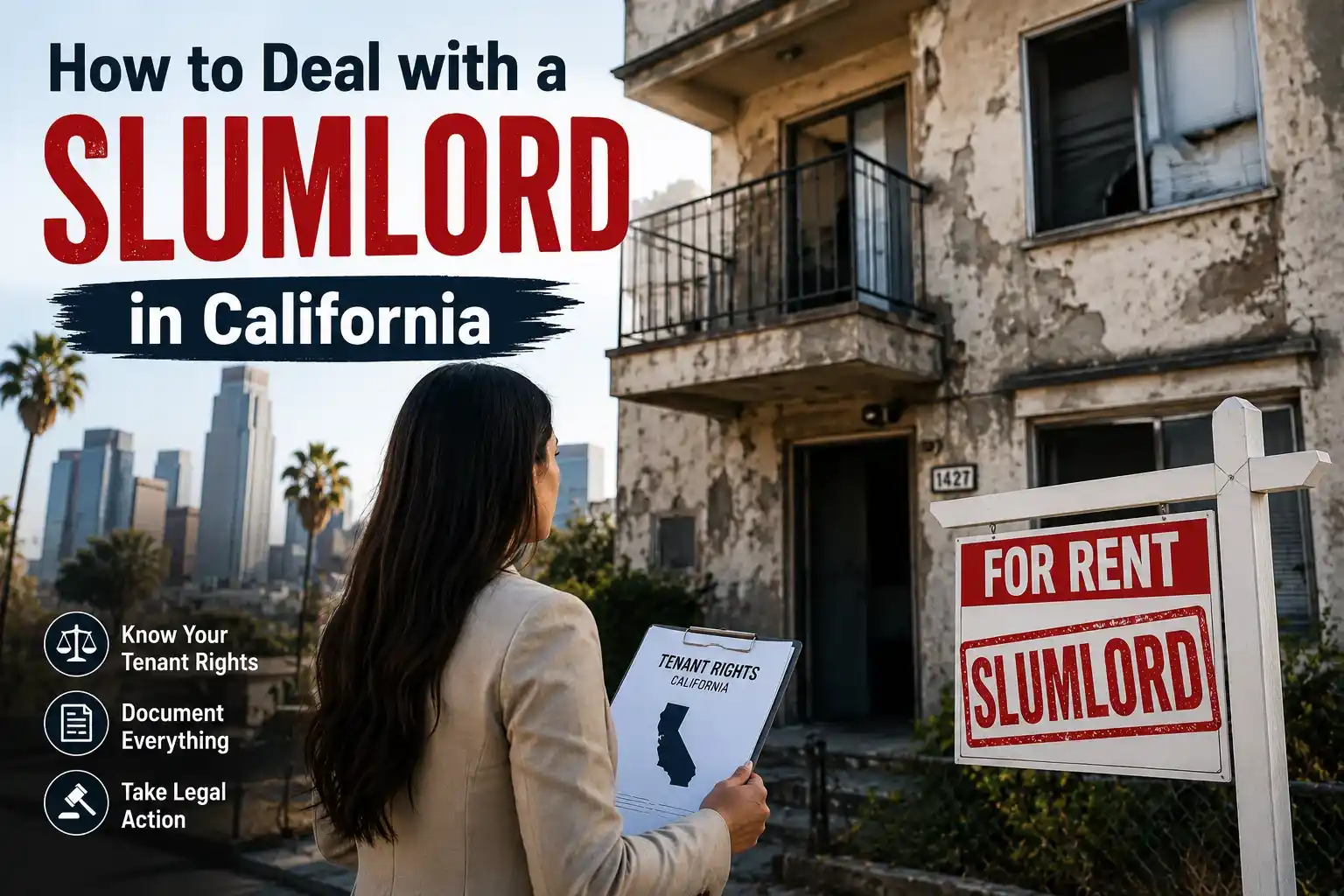
How to Deal with a Slumlord in California: Your Complete Tenant Action Guide
Watch this video for a simple overview of what tenants can do when a slumlord ignores serious repair problems. Keep in mind that California uses a “reasonable time” standard, so urgent health or safety issues may require faster action than ordinary repairs.
Finding mold creeping up your bathroom wall, a broken heater in January, or roaches in your kitchen cabinets is more than an inconvenience. It’s stressful. If your landlord ignores repair requests, lets your unit fall apart, or threatens you when you ask for basic maintenance, you may be dealing with what’s commonly called a slumlord in California.
California has some of the strongest tenant protection laws in the country, and you have real options. This guide walks you through how to deal with a slumlord in California step by step, using California tenant rights under the Civil Code, practical documentation strategies, and help when your landlord won’t act.
Quick Answer: If you have a slumlord in California, your first steps are to document the problems in writing and with photos, send a written repair request, and give your landlord a reasonable amount of time, generally up to 30 days for non-emergencies, to fix the issue before using remedies like repair and deduct, rent withholding, or filing a complaint with your local housing or code enforcement agency.
What Is a Slumlord? (Legal Definition in California)
There’s no single statute that uses the word “slumlord.” It’s a term renters use to describe a landlord who consistently fails to maintain a property in a safe, livable condition, often across multiple units or properties, while still collecting rent.
What matters legally is simple: your landlord must keep your rental home safe and livable. This rule is called the implied warranty of habitability, and it applies to California rental homes under California Civil Code 1941.
A landlord does not need to act cruelly or dishonestly to create a serious legal problem. If they keep collecting rent but fail to provide basic living conditions, such as working plumbing, heat, safe wiring, or a pest-free home, they may be violating California habitability laws.
Slumlord vs. Negligent Landlord: What’s the Difference?
Not every bad rental experience means your landlord is a slumlord. The difference usually comes down to the pattern, severity, and whether the landlord continues to ignore serious habitability problems after being notified.
| Factor | Negligent Landlord | Slumlord |
|---|---|---|
| Repair Issues | May delay fixing a specific problem. | Regularly ignores major repair requests. |
| Habitability Problems | Usually limited to isolated issues. | Often involves multiple serious violations. |
| Code Violations | May have few or no citations. | Frequently receives code enforcement citations. |
| Pattern of Conduct | Typically a one-time or occasional issue. | Shows a long-term pattern of neglect. |
| Legal Risk | May face landlord negligence claims. | Stronger claims that may support punitive damages. |
California Tenant Rights: What Your Landlord Must Provide by Law
California law looks at whether the home is safe, sanitary, and fit to live in. When serious problems continue after the landlord receives notice, those conditions may support a tenant’s habitability claim.
Specifically, a habitable rental unit under California law generally must have:
- Effective waterproofing and weather protection of the roof and walls.
- Plumbing and gas facilities that comply with applicable law.
- A water supply with hot and cold running water connected to a sewage system.
- Heating facilities that work properly.
- Electrical lighting and wiring are in good working order.
- Clean and sanitary common areas, free from debris, filth, and vermin.
- Adequate trash receptacles.
- Floors, stairways, and railings are maintained in good repair.
- Locking mail receptacles and working deadbolt locks on main entry doors.
California’s Health and Safety Code 17920.3 also helps define unsafe living conditions in California, including serious dampness, poor sanitation, and faulty weather protection. Some cities, such as Los Angeles, San Francisco, and Oakland, may have stricter local housing rules, so tenants should also check their city’s housing code.
Signs You’re Dealing With a Slumlord, Not Just a Slow Landlord
Some patterns are serious red flags. They may point to landlord negligence that California courts or code enforcement agencies could take seriously.
You may be dealing with a slumlord if:
- Your landlord threatens eviction, raises rent, or acts aggressively soon after you ask for repairs.
- ignores repeated repair requests for weeks or months.
- Mold keeps growing, and your landlord refuses to fix the source of the problem.
- Roaches, bed bugs, rodents, or other pests continue after you complain.
- Your heat does not work during cold months.
- You have exposed wiring, broken locks, or other safety risks.
- Code enforcement has already cited the property.
- Other tenants report the same unresolved problems.
If two or more of these apply to your situation, it’s time to start documenting and acting using the steps below.
Step-by-Step: What to Do If You Have a Slumlord in California
This is the core action plan. Follow these steps in order. Skipping steps, especially documentation and written notice, can weaken your legal position later.
Step 1: Document Everything
Before you do anything else, build a paper trail.
- Take dated photos and videos of every problem (mold, leaks, broken appliances, pests, exposed wiring).
- Keep copies of every text, email, and letter to your landlord.
- Write down dates, times, and summaries of any phone calls or in-person conversations.
- Save receipts for anything you buy to handle the problem (dehumidifiers, pest traps, space heaters).
This documentation becomes essential if you later need to use repair and deduct, withhold rent, or pursue a lawsuit.
Step 2: Send a Written Repair Request
Verbal complaints are easy for a landlord to ignore or deny ever happened. Put your request in writing, even if you’ve already mentioned the issue verbally.
Your written notice should include:
- The specific problem (be detailed: “active mold growth covering approximately 2 square feet on the bathroom ceiling near the exhaust fan”).
- The date you’re sending the notice.
- A reasonable deadline for repair (reference the urgency: emergencies like no heat or no hot water need faster action than cosmetic issues).
- A request for written confirmation that the landlord received your notice.
Send it by certified mail with a return receipt, or by email with read receipts enabled, so you have proof of delivery.
Step 3: Contact Your Local Housing Authority or Code Enforcement
If your landlord doesn’t respond or doesn’t fix the problem within a reasonable time, the next step is to report a slumlord in California to your local code enforcement agency or housing department. Most California cities and counties have a code enforcement division that will inspect the property and issue citations if violations are found.
This step matters for two reasons: it creates an official government record of the violation, and it can trigger required repairs without you having to sue.
Step 4: Use the “Repair and Deduct” Remedy (Civil Code 1942)
Quick Answer: California Civil Code 1942 allows tenants to repair a habitability problem themselves and deduct the cost from rent, but only if the cost does not exceed one month’s rent, the problem affects health or safety, and the landlord had reasonable notice but failed to act. For non-emergency repairs, 30 days is often treated as a reasonable time.
Important limits on repair and deduct:
- The condition must materially affect health and safety, not just be cosmetic.
- You generally need to wait a reasonable time after notice, and acting after 30 days is presumed reasonable under the statute.
- You can use repair and deduct up to 2 times in 12 months.
- The remedy is unavailable if you caused the damage yourself.
Step 5: Consider Rent Withholding (How to Do It Safely)
Rent withholding is riskier than repair and deduct. If your landlord fails to fix serious habitability problems after proper notice, you may have the right to withhold part or all of the rent until repairs are made. Because this can lead to an eviction case if done wrong, speak with a tenant attorney or legal aid group before withholding rent.
Courts do not always allow tenants to withhold 100% of the rent. They usually look at how much the rental unit’s value dropped due to the habitability problem. If your landlord files an eviction case, you must prove that the problem was serious enough to justify the amount of rent you withheld.
Step 6: File a Formal Complaint with the Right Agency
Depending on the issue, several agencies can help:
- Local code enforcement for building and habitability violations.
- California Department of Consumer Affairs for general tenant rights questions and referrals.
- Local health department for mold, pest, or sanitation issues that pose health risks.
- HUD, if you live in Section 8 or other federally subsidized housing, and your landlord isn’t maintaining the unit.
- California Civil Rights Department (formerly DFEH), if you believe the neglect is connected to housing discrimination based on a protected characteristic.
Step 7: Consult a Slumlord Attorney in California
If the problem is serious, ongoing, or the landlord retaliates, it’s time to talk to an attorney who handles habitability and slumlord lawyer cases. Many California tenant attorneys offer work on contingency for habitability lawsuits, meaning you don’t pay unless they recover money for you.
What Compensation Can You Recover from a Slumlord Lawsuit in California?
Quick Answer: Tenants who sue a slumlord in California may recover money for rent they overpaid, damaged belongings, temporary housing, repair costs, or health problems linked to unsafe conditions. In some cases, tenants may also recover attorney’s fees if the lease or a specific law allows it.
Possible categories of compensation include:
- Reduced rental value: the difference between what you paid and what the unit was actually worth in its uninhabitable condition.
- Cost of repairs you paid for under repair, and deduct if not properly reimbursed.
- Relocation costs if you had to move out due to uninhabitable conditions.
- Property damage caused by leaks, mold, or pest infestations.
- Medical expenses, if you can show the conditions caused injury or illness, this often requires expert testimony connecting the condition (such as toxic mold) to a health outcome.
- Emotional distress damages in some cases, particularly where the landlord’s conduct was egregious or retaliatory.
- Attorneys’ fees and costs, if your lease includes an attorney fee clause (California Civil Code allows the prevailing tenant to recover fees if the lease has a fee provision for the landlord, since such clauses are reciprocal under Civil Code 1717).
How Much Can You Sue a Slumlord For in Small Claims Court?
Quick Answer: In California small claims court, an individual can usually sue for up to $12,500. A business or corporation can usually sue for up to $6,250. Filing fees generally range from $30 to $75, depending on the claim amount.
Small claims court is often easier for tenants because you usually do not need a lawyer. In most cases, attorneys cannot represent you at the hearing. This can help tenants recover smaller losses, such as repair costs or part of the rent paid while the unit was unsafe or unlivable.
How Long Does a Slumlord Lawsuit Take in California?
There is no fixed timeline for a slumlord lawsuit in California. The timeline depends on the court, the facts of the case, and whether the landlord agrees to settle. Small claims cases may finish within a few months, while larger civil lawsuits can take a year or more, especially if the case goes to trial.
What If Your Landlord Retaliates? (Civil Code 1942.5 Protection)
Quick Answer: Under California Civil Code 1942.5, a landlord cannot retaliate against a tenant for making a good-faith complaint about habitability problems. If the landlord raises rent, cuts services, serves an eviction notice, or takes another negative action within 180 days of the complaint, California law may presume the action was retaliatory.
Many tenants stay quiet because they fear eviction or harassment after asking for repairs. California law gives tenants a way to push back when a landlord uses pressure instead of fixing unsafe conditions.
What Counts as Retaliation?
- A sudden rent increase shortly after you complain.
- A notice to vacate or eviction filing after a repair request or code enforcement complaint.
- Reducing services you previously had (parking, storage, utilities).
- Harassment, including frequent unannounced landlord entries.
If your landlord gives you an eviction notice soon after you report unsafe conditions, save every detail.
Constructive Eviction California: When You Can Walk Away
Quick Answer: Constructive eviction happens when a rental unit becomes so unsafe or unlivable that the tenant may be legally justified in moving out and ending the lease, even if the landlord never gave a formal eviction notice.
To claim constructive eviction, the problem must be serious enough to make the unit truly unsafe. Before moving out, notify the landlord first and give them a chance to fix it.
Mold, Pests, and Toxic Substances: Tenant Rights in California
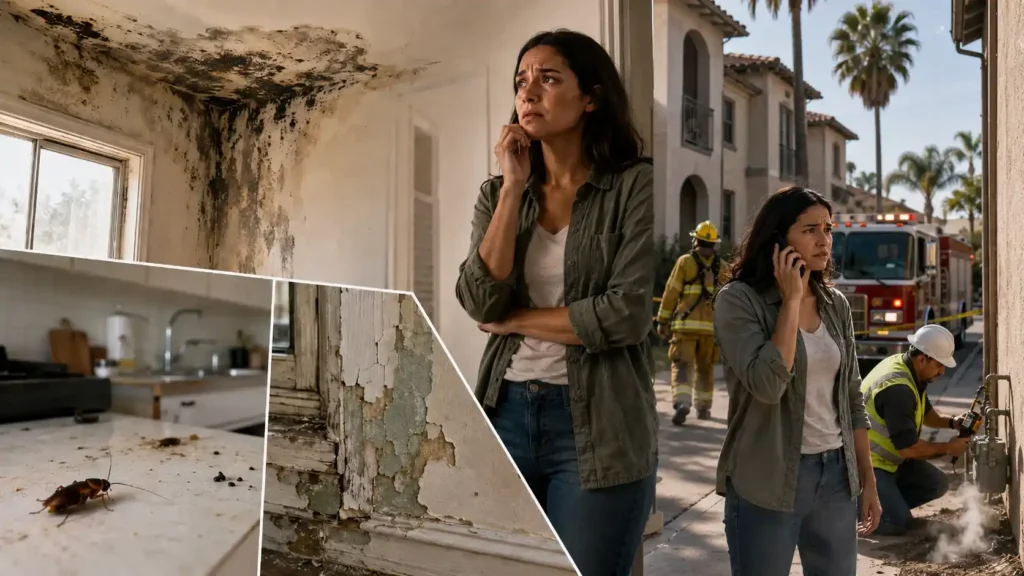
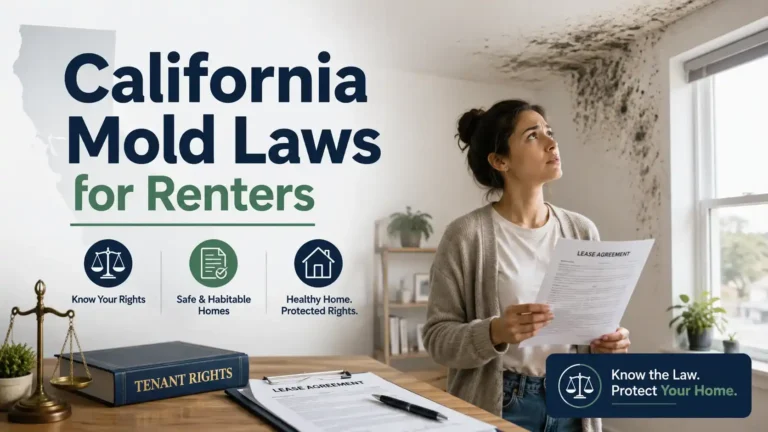
For mold in an apartment in California, the key issue is whether mold grows from a property problem, such as a leak, poor ventilation, or water intrusion. If the mold is spreading or affecting health and safety, the landlord may need to fix the source of moisture and arrange proper remediation, not just wipe the surface.
What If Your Rental Has Cockroaches, Bed Bugs, or Rodents?
Cockroach infestation rights and bed bug landlord liability usually depend on the cause and severity of the problem. If pests keep recurring, spread to multiple units, or continue after the landlord receives notice, the landlord may need to arrange proper licensed pest control.
Lead Paint and Asbestos Disclosure Rules in California Rentals
Older California rentals may have lead paint, asbestos, or other hidden hazards. Homes built before 1978 are subject to federal lead-based paint disclosure rules. If you suspect lead paint or asbestos, do not scrape, sand, or remove it yourself. Notify your landlord and contact your local health department if the issue may affect your safety.
Can You Sue Your Landlord for a Gas Leak in a California Apartment?
Yes, you may be able to sue if you moved into a California apartment with a gas leak and the landlord knew, or should have known, about the dangerous condition. A gas leak in a rental apartment is not a minor repair issue. It can create serious safety and habitability concerns, especially if the landlord failed to inspect, disclose, or repair the problem before you moved in.
If you smell gas, leave the unit right away. Do not use light switches, appliances, candles, or anything that could create a spark. Call the gas company, emergency services, or your local fire department from a safe location.
A tenant may have a claim if the gas leak caused relocation costs, hotel expenses, lost rent, medical bills, damaged belongings, or other harm. The strength of the case usually depends on what the landlord knew, when they knew it, how quickly they responded, and whether the unsafe condition existed before move-in.
California City Resources for Tenant Complaints
California tenant rights start with state law, but many cities offer extra help through local housing departments, rent boards, or code enforcement offices. If your landlord ignores serious repairs, check your city’s complaint process along with your statewide legal options.
| City | Where to Start | What It Can Help With |
|---|---|---|
| Los Angeles | LA Housing Department | Code enforcement, rent stabilization, habitability complaints. |
| San Francisco | SF Rent Board | Rent control, eviction protections, tenant petitions. |
| Oakland | Oakland Rent Adjustment Program | Rent control petitions, rent reductions, habitability issues. |
| Sacramento | Sacramento Code Enforcement | Building and housing code violations. |
| Fresno | Fresno Code Enforcement | Substandard housing complaints and inspections. |
Local rules can provide tenants with extra protections, especially in rent-controlled cities, so always check your city or county housing department before taking your next step.
Free and Low-Cost Legal Help for Tenants in California
You do not need a large budget to get help with unsafe housing, eviction threats, or serious repair issues. California tenants can often find support through these resources:
- Legal aid organizations: Many counties have legal aid groups that help low-income tenants with habitability issues, eviction defense, and unsafe housing problems.
- Tenant unions and tenant rights groups: These groups may help you understand your rights, organize with neighbors, and find local support.
- County bar association referrals: Local bar associations can connect you with tenant attorneys, and some offer low-cost or free consultations.
- Court self-help centers: California courthouse self-help centers can explain basic court forms, small claims steps, and eviction procedures.
- California Civil Rights Department: If your case involves housing discrimination based on race, disability, family status, source of income, or another protected category, CRD may investigate your complaint.
Frequently Asked Questions
Can my landlord blame me for unsafe living conditions in California?
Yes, a landlord may claim the tenant, their guests, or their pets caused the problem, especially in cases involving mold, pests, broken fixtures, or water damage. That does not automatically make the tenant responsible. The main question is what caused the condition and whether the landlord failed to fix a property-related issue after receiving notice.
What if my landlord makes a cheap temporary repair?
If your landlord makes a cheap temporary repair, watch for the same habitability problem to return. A quick patch may not be enough if the leak, mold, pest infestation, broken heat, or unsafe wiring continues to affect your rental unit. Take updated photos, save the dates, and send a written follow-up stating that the repair did not fully fix the issue.
What if my landlord only uses a rental portal for repair requests?
If your landlord only uses a rental portal for repair requests, use the portal but keep your own records too. If the portal closes, deletes, or marks the request complete before the problem is fixed, send a follow-up email explaining that the issue is unresolved. This can help protect your California tenant rights if you later need to report the landlord or show a repair history.
Conclusion: You Don’t Have to Stay Silent
Dealing with a slumlord in California is exhausting, but you’re not without options. California’s habitability laws, particularly Civil Code 1941, 1942, and 1942.5, give tenants real tools: the right to demand repairs, the right to use repair and deduct or rent withholding under the right circumstances, and strong protection against retaliation.
The single most important thing you can do today is start documenting. Take photos, send a written notice, and keep copies of everything. From there, work through the steps in this guide, from contacting code enforcement to consulting an attorney if things don’t improve.
If you’re currently dealing with a habitability issue, your next step should be sending a written repair request to your landlord today, even if you’ve already mentioned the problem verbally. If you’ve already done that and nothing has changed, contact your local code enforcement agency or a tenant rights organization for next steps.
Also read: California landlord security deposit rules
References
- California Civil Code Section 1941
- California Civil Code Section 1941.1
- California Civil Code Section 1942
- California Civil Code Section 1942.5
- California Health and Safety Code Section 17920.3
- California Courts Self-Help Guide: Small Claims in California
- Los Angeles County DCBA: Repairing Your Rental Unit
- California Civil Rights Department: Complaint Process
- U.S. EPA: Lead-Based Paint Disclosure Rules
- HUD Exchange: Housing Quality Standards Inspection Resource
- Public Policy Institute of California: California’s Renters
Disclaimer: This article is for informational purposes only and does not constitute legal advice. Tenant law changes frequently, and your situation may involve facts that change how the law applies to you. Consult a licensed California attorney or your local tenant rights organization before taking legal action.